
How do I stay safe around water indoors?
Stay on dry ground, keep others out of wet rooms and call from a safe location. If your house is flooded, what to do next depends first on electrical hazards and safe access.
- Avoid water near outlets, appliances, cords or the electrical panel.
- Don't cross a wet floor to reach a breaker or unplug equipment.
- Leave rooms with sagging ceilings, loose flooring or an uncertain exit.
- Keep children and pets away from standing water and damaged materials.
If anyone is trapped or there's an immediate threat to life, contact emergency services. You don't need to inspect every room to describe the problem during a cleanup call.
Can I stop the leak without entering the water?
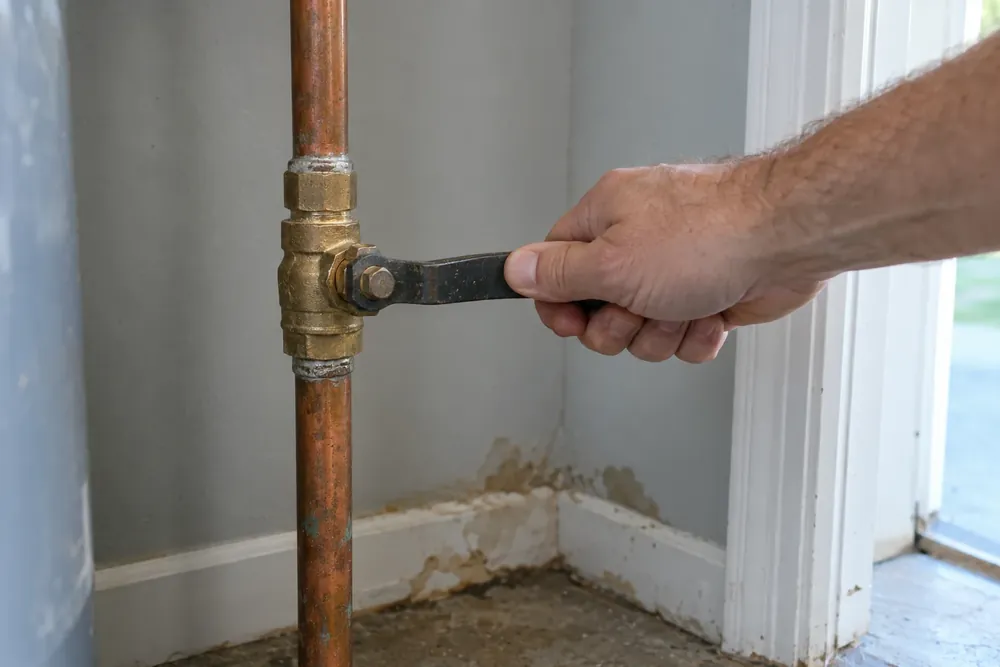
You can close an accessible shutoff when the route and valve are dry and safe to reach. Deciding what to do if water pipe bursts occur starts with safe access, since the broken plumbing and escaped water need separate attention.
Don't reach behind a wet appliance or enter a flooded utility room to hunt for a valve. Tell the person answering your call if water is still flowing or you don't know where the shutoff is. For burst pipe water damage, a plumber addresses the broken pipe while your technician checks surrounding materials for trapped moisture. A roof leak needs its own source repair.
Should I move belongings and take photos?
Move reachable belongings and photograph damage only from a safe, dry position. With a flooded house, what to do about furniture depends on whether you can reach it without stepping into water or passing under damaged ceilings.
- Lift papers and small valuables onto dry shelves.
- Leave heavy furniture, wet electronics and contaminated items alone.
- Photograph affected rooms and visible damage without opening walls.
- Save photos and repair records together for documentation for insurance.
Call from outside for advice on what to do when flooded house contents block a doorway. Don't force your way through debris. Your technician can document moisture readings and the written scope as the affected materials are assessed.
Which cleanup attempts could make the damage worse?
Avoid dry household vacuums on sewage, forced drying through the HVAC system and opening damaged ceilings yourself. If you're deciding what to do about ceiling water damage, keep the area below a bulge or sag clear and describe it during your call.
For sewage spillage, stay clear of the affected area and call your local sewer utility or a qualified cleanup professional. Don't enter a basement with standing water or a rotten egg smell, or operate electrical equipment while standing in water. Leave unknown contaminated water for assessment. Keep the HVAC system off if water has reached its components, ducts or return area; don't run it to dry wet materials. Leave floor coverings and wall cavities for assessment rather than pulling them apart.
Call about emergency water removal now. One of our local water damage partners will explain the proposed cleanup scope and pricing before work begins.